We repair weak flow at one faucet for homeowners and property managers, including aerator and fixture-side issues; typical jobs run $100–$350, depending on access and parts.
Why Water Pressure Surges Then Fades in Delaware Homes
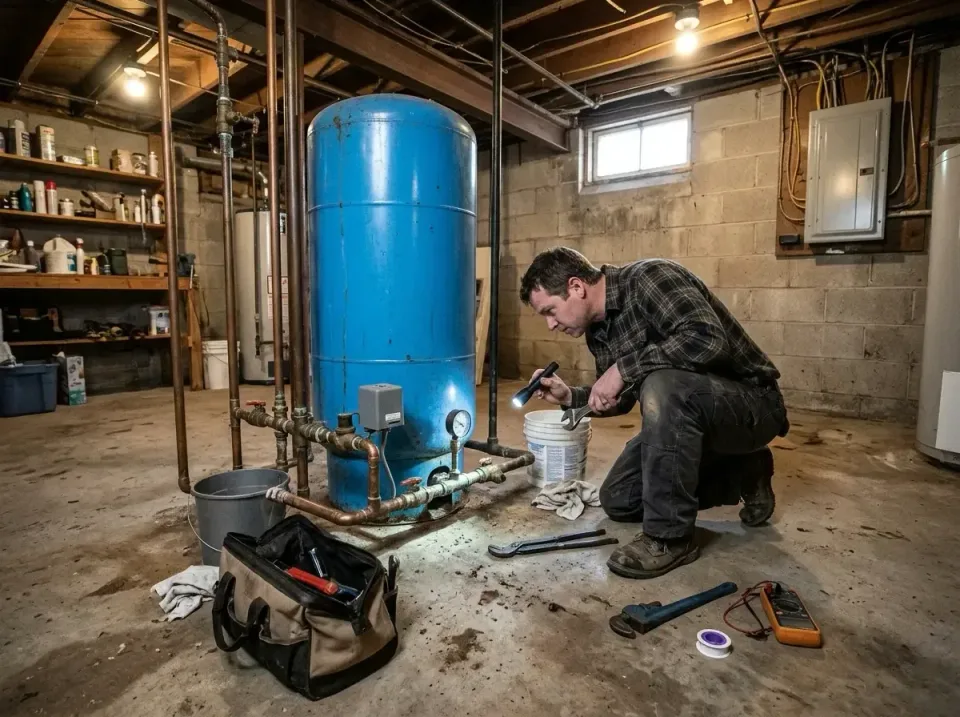
Why Does Water Pressure Surge Then Fade in Delaware Homes?
A faucet that blasts briefly, then weakens, often signals a supply or pressure-control problem not just a fussy fixture. The change between the first surge and later flow is a useful clue.
In Delaware City, a sudden service disruption can make a household pressure change feel abrupt; check whether neighbors notice it too. Near the Delaware Memorial Bridge, keep in mind that hurricanes and tropical storms can disrupt water service, so a surge followed by fading flow may coincide with a wider interruption. Don’t guess at a repair.
-
Check the pattern: Notice whether one faucet or several fixtures are affected.
-
Consider the timing: Record whether the change began during or after a storm.
-
Watch for recurrence: Repeated surges deserve a pressure test rather than repeated knob adjustments.
Our Delaware crew tests before recommending work and explains the likely cause and options. If the change returns, note which fixtures are running and contact Delaware Plumbing Pros.
What Does a Surge Followed by Fading Flow Suggest?
A brief strong burst followed by a weak stream can point to a pressure-control issue, a restricted pipe, or a supply that cannot keep up with demand. The pattern matters: if several fixtures fade together, look beyond one faucet; if just one does, start at that fixture. A faucet aerator can collect debris, but cleaning it will not fix a whole-house pressure drop.
We compare static pressure, measured with fixtures closed, with flowing pressure while water runs. That difference helps show whether the problem appears only under demand. The Delaware Park area is one local reference point for homeowners tracking a recurring change across their home; note whether it happens at multiple fixtures and at similar times. Test first.
Could Delaware’s Weather or Home Conditions Play a Role?
Delaware’s humid subtropical climate brings seasonal shifts that can affect plumbing and the way homeowners notice pressure problems. Cold winter nights can freeze exposed plumbing, so a pipe in an unheated space deserves attention if pressure changes after a hard freeze. A frozen or damaged section may restrict flow, and a leak can leave evidence even after conditions warm.
Near the University of Delaware, as elsewhere in the state, the useful check is the home’s own plumbing not an assumption based on location. Look for damp areas, unusual sounds, or a change that affects several rooms.
Older pipes with internal buildup can also narrow the passage available to water. If symptoms persist after weather changes, have the line and pressure controls inspected rather than repeatedly cycling fixtures.
When Should You Call a Plumber Instead of Trying a Fix?
For one weak faucet, cleaning the removable aerator is a reasonable first step. Stop there if the pressure surge returns, several fixtures are affected, or you see moisture near a pipe; opening a pressure regulator or changing a pump setting without measurements can make the system less stable.
Our crew starts by asking which fixtures are affected, then tests pressure under both closed-fixture and flowing conditions. That distinction helps separate a fixture restriction from a system-wide supply problem.
We also inspect accessible controls and explain what the readings suggest before work begins. If your symptoms are limited to one tap, our guide to checking a sudden faucet pressure drop can help you make a safe initial check.
What Can Repeated Pressure Changes Mean for Your Home?
A recurring drop may be linked to a regulator that is sticking, a restriction in the piping, a leak, or a supply that falls short when water is used. If the shower weakens when another fixture runs, observe the timing and number of fixtures rather than changing several controls at once. A pressure regulator repair may be appropriate when testing points to that valve, but replacement should follow diagnosis.
Water hammer, unusual pump cycling, or new damp spots are useful clues to report. Around Brandywine Creek State Park, homeowners can use the same practical approach as elsewhere in Delaware: write down when the surge starts, how long it lasts, and whether more than one fixture is affected. That record helps us narrow the cause and explain a repair path.
Which Pressure Repair Fits a Delaware Home?
The right option depends on whether pressure shifts across the house, at one fixture, or only when water is flowing; readings help distinguish those cases.
| Option | Best for | Key detail |
|---|---|---|
| Water pressure testing | Unclear or changing pressure | Compare static and flowing readings; a common residential range is 40–80 psi. |
| Pressure regulator repair or replacement | Unstable system pressure | Regulator connections are commonly 3/4–1 inch; assess the valve before replacing it. |
| Booster pump installation | Supply that remains inadequate | Pump selection depends on flow demand, measured in gallons per minute. |
| Fixture-specific repair | One weak tap | Cleaning an aerator targets that faucet, not a whole-house issue. |
Near Delaware Seashore State Park, a home’s pressure still needs to be tested rather than inferred from the coastal setting. Heavy rainfall can increase basement seepage risk, so tell the plumber if the pressure change accompanies moisture in a basement. In Dover, the Delaware State Capitol is a familiar reference point, but the repair decision depends on the home’s readings and symptoms.
How Do You Prepare for a Pressure Check?
When pressure surges and fades in a coastal home, note whether the change is isolated or house-wide before the appointment. Near the Bethany Beach Boardwalk, salt air can corrode exposed plumbing components, so mention any visible corrosion rather than attempting to loosen a stuck fitting yourself.
-
Record the symptoms: Note which fixtures change and whether the flow fades while water is running.
-
Clear the work area: Make room around the meter and regulator, and confirm access to the basement or crawlspace.
-
Protect nearby flooring: Move stored items away from the plumbing work area.
-
Locate the shutoff: Identify the main shutoff valve without forcing a stuck handle.
-
Plan for an interruption: Ask whether water must be off during testing or repair.
-
Review the result: Have the plumber test multiple fixtures after restoration and explain the findings.
Coastal flooding can affect low-lying properties, so report any recent water intrusion near plumbing equipment. If your home is near Newark Reservoir, include that location when describing where you noticed the change.
Common Questions About Low Water Pressure Repair in Delaware
Can Water Pressure Surge Then Fade Only When My Well Pump Runs Constantly?
Yes, a constantly cycling well pump can accompany pressure that rises and then falls. Ask the plumber to check the pressure switch and tank operation rather than adjusting settings blindly; at the Mispillion Riverwalk, as in any service area, the equipment’s readings not the landmark determine the cause.
How Much Does Testing Cost When Pressure Surges Then Fades?
Pressure testing is $75–$250, depending on diagnostic time and access. A clear path to the meter and pressure controls can help the plumber compare readings and explain whether further work is indicated; winter precipitation may include rain, sleet, or occasional snow, so mention access conditions when scheduling.
Should I Call a Plumber for Water Pressure That Surges Then Fades?
Yes, call a plumber when the change repeats at several fixtures, returns after a basic aerator check, or comes with signs of a leak. Delaware Plumbing Pros can test the system and explain the findings; near Winterthur Museum, Garden and Library, as elsewhere, avoid opening pressure controls without a diagnosis.
Do Delaware Plumbing Rules Matter for Pressure Regulator Replacement?
Yes, pressure regulator work should follow applicable Delaware State Plumbing Code requirements and the International Plumbing Code pressure-regulating valve provisions. Ask the contractor how the proposed work applies to your home; the First State Heritage Park is a local landmark, not a substitute for confirming the project’s code requirements.
Could Low Hot Water Pressure Be Related to Surging and Fading?
Yes, if the change is limited to hot water, the restriction may be on the hot-water side rather than the home’s main supply. Describe which taps are affected and ask about Low Hot Water Pressure Repair; around Nemours Estate, a fixture-by-fixture comparison is more useful than guessing from one faucet.
Get a Clear Diagnosis for Pressure Changes
A brief surge followed by fading flow is a symptom, not a diagnosis. If it repeats across multiple fixtures, note when it occurs and arrange a pressure check before changing system controls. Near Cape Henlopen State Park, exposed outdoor plumbing deserves attention after freeze-thaw cycles stress pipes and hose bibs; report any visible damage or leak signs.
Basements and crawlspaces also deserve a look, since high humidity can encourage condensation that makes moisture harder to interpret. Don’t mistake every damp spot for a pipe leak, but do mention it during an inspection.
Delaware Plumbing Pros will test the water pressure, identify the likely cause, and explain repair options before work begins. For a measured assessment, request Water Pressure Testing or call (877) 773-0781.
Services Offered
Services We Offer in Wilmington, DE
Explore related services available in Wilmington, DE.
We repair restricted hot-water flow at heaters and fixtures, checking connections and pipe condition; typical repairs may run $150–$500 depending on access and parts.
Emergency pressure loss repair tracks sudden supply failures and restores service for Delaware homes; Winterthur-area visits can involve access challenges, with cost driven by repair scope and parts.
Shower pressure repair covers weak spray and restricted shower flow; fixture access and parts affect typical $150–$500 repair costs. Near White Clay Creek State Park, Mispillion Riverwalk, and Rehoboth Beach Boardwalk...
Clearing accessible pipe obstructions and restoring flow for homeowners; typical jobs run about $150–$500, depending on clog depth and pipe access.
Whole House Pressure Repair checks home-wide flow and pressure controls; typical repair pricing depends on the affected parts and access.
Install a residential booster pump sized to the home; Delaware jobs typically run $800–$2,500, depending on pump capacity and electrical work. Storm access near Rehoboth Beach Boardwalk may delay visits.
We repair residential well pump pressure systems, checking pump controls and connections; diagnostic time and access shape typical $75–$250 testing costs.
We repair or replace well pressure tanks for homeowners, accounting for tank size and plumbing changes; scope determines the typical cost.
We trace concealed plumbing leaks for homeowners and property managers, checking accessible pipe runs and pressure loss; repair cost depends on leak location and access.
We repair residential pressure regulators, including accessible brass valve assemblies; typical repairs run $150–$500, depending on valve condition and parts.
We repair residential main water lines, including accessible copper or PEX sections; typical jobs run $600–$3,500, with excavation and pipe length affecting the total.
We repair residential softener valves, resin beds, and bypass connections; typical repairs run $150–$600, depending on parts and access.
Water Pressure Testing compares static and flowing readings at residential fixtures; typical testing runs $75–$250, with diagnostic time and access affecting the total.
We repair residential filter housings, valves, and clogged cartridges; access and replacement parts shape typical costs, often about $150–$600. Winter rain, sleet, or snow can complicate outdoor access.
Mineral Buildup Pipe Clearing removes scale from restricted household pipe sections; typical jobs run about $250–$1,500, depending on access and buildup.
Cities & Towns
Service Areas in Wilmington
Select a city to find local low water pressure repair providers we cover in Wilmington.
Wilmington, DE19802Dover, DE19901Newark, DE19717Middletown, DE19709Bear, DE19701Glasgow, DE19702Milford, DE19963Brookside, DE19713Hockessin, DE19707Smyrna, DE19977Pike Creek Valley, DE19808Claymont, DE19703Seaford, DE19973North Star, DE19711Georgetown, DE19947Wilmington Manor, DE19720Millsboro, DE19966Pike Creek, DE19808Edgemoor, DE19809Elsmere, DE19805New Castle, DE19720Laurel, DE19956Clayton, DE19938Camden, DE19934
Show all 41 cities
Rising Sun-Lebanon, DE19962Harrington, DE19952Highland Acres, DE19901Milton, DE19968Lewes, DE19958Selbyville, DE19975Dover Base Housing, DE19901Ocean View, DE19970Bridgeville, DE19933Townsend, DE19734Long Neck, DE19966Greenville, DE19807Delmar, DE19940Riverview, DE19946Millville, DE19967Kent Acres, DE19901Woodside East, DE19962
Get a Quote
Get a Low Water Pressure Repair Quote in Wilmington, DE
Share job details below or call our team directly. Phone: (877) 773-0781