We repair weak flow at one faucet for homeowners and property managers, including aerator and fixture-side issues; typical jobs run $100–$350, depending on access and parts.
Well Pump Runs Constantly? When to Check an Amtrol Well-X-Trol Tank
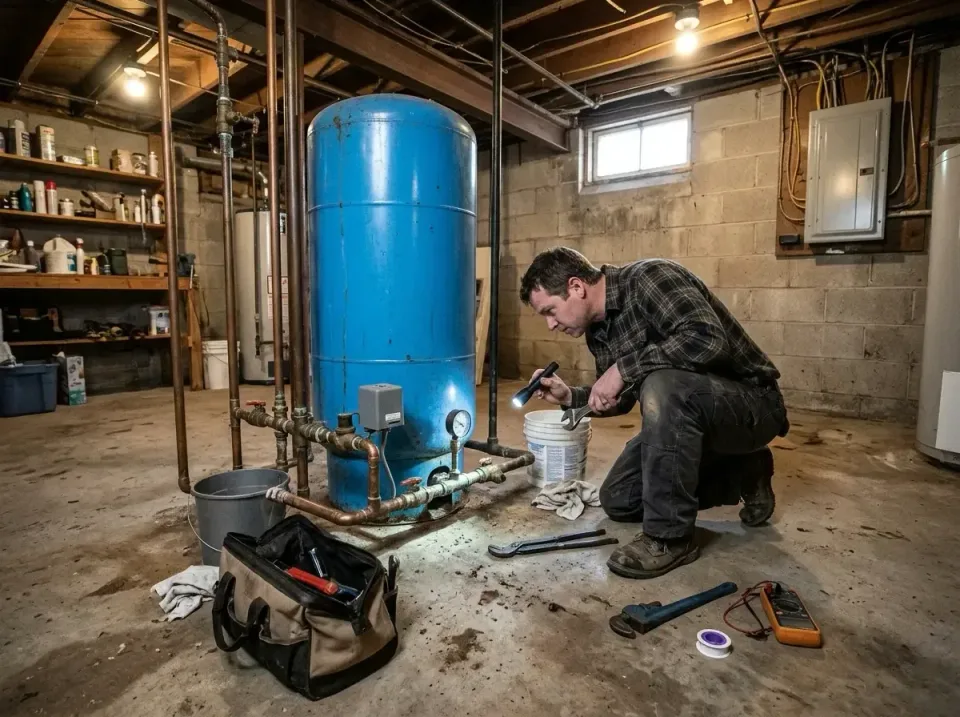
Why Does a Well Pump Keep Running in Delaware?
When a well pump runs constantly, check the pressure tank and system for a leak or control problem before adjusting the pressure switch. A failed bladder in an Amtrol Well-X-Trol tank can reduce its ability to store pressurized water, making the pump cycle frequently or run without stopping. Seasonal drought can affect private well supplies, so a falling water level may also make the pump struggle to build pressure; do not assume the tank is the only cause.
At Battery Park in New Castle, homes with private wells still need prompt attention to unexplained pump activity; the park itself is a useful local reference, not a signal about a particular home’s water source. Near the Bethany Beach Boardwalk, a homeowner should note whether the pump problem worsens after dry weather and share that pattern during diagnosis.
Our Delaware Plumbing Pros crew tests before recommending a repair and explains the options before work begins. Start with these clues:
-
Pump never stops: Turn off water-using fixtures and listen for continued operation.
-
Pressure swings: Note whether faucets pulse or pressure fades soon after the pump starts.
-
Tank symptoms: Watch for rapid cycling, but do not open or pressurize the tank yourself.
Record what you observe and arrange a system check if the pump keeps running.
What Does a Constant-Running Pump Tell You?
A pump that runs without reaching its shutoff point is working against a problem, not simply showing that the tank is empty. First, check that every fixture is off and look for visible water use or leakage. If the pump continues, stop repeated resets and note how long it runs; prolonged operation can wear the pump and raise the chance of a breakdown.
In our field work, a common missed step is checking whether the pressure rises at all while the pump runs. A pressure gauge reading that barely changes points toward a supply, pump, leak, or control issue not proof of a bad tank by itself. Delaware homeowners near Newark Reservoir may recognize the landmark, but a public reservoir is not evidence that a property uses municipal water; confirm whether the home is on a private well before describing the system.
When Should You Check the Amtrol Tank?
Check the tank when the pump starts and stops rapidly, pressure surges, or the pump runs longer than usual after water use ends. An Amtrol Well-X-Trol tank stores water under pressure so the pump does not need to start for every brief draw. If its bladder fails or the tank loses its proper air charge, usable drawdown can shrink and cycling can become frequent.
Do not tap a tank and treat its sound as a diagnosis. A technician checks system pressure and tank condition using the appropriate procedure, then compares those findings with the pressure switch and pump behavior.
Storm debris and outages may delay repair access after severe weather, so share any outage history and give the crew a clear path to the well equipment when scheduling. That detail can help separate an equipment fault from a recent interruption.
Could the Pressure Switch or Well Supply Be at Fault?
Yes, either can keep a pump running, so a tank replacement should follow testing rather than guesswork. The pressure switch controls when the pump starts and stops; damaged contacts, a blocked connection, or incorrect adjustment may prevent normal shutoff. A well with inadequate yield, a leak in the system, or a pump that cannot build pressure can produce similar symptoms.
Inland areas generally experience fewer direct coastal effects, but that does not rule out a private-well supply issue or equipment wear. Delaware’s University of Delaware campus is a familiar landmark; for a home near it, location alone still cannot tell us the well’s condition.
We check the actual equipment and measured pressure. Our Well Pump Pressure Repair service focuses on tracing the cause before changing parts.
When Is DIY Safe, and When Should You Call?
You can safely note the pump’s cycling, switch off faucets, and check for obvious water running at fixtures. Stop there if the motor runs continuously, the breaker trips, pressure falls away, or you see water near electrical equipment. Do not adjust the pressure switch or open a pressurized tank; an incorrect setting can mask a failing pump or leave the home without reliable water.
A practical rule: observe, record, then get a diagnosis. In Delaware, storms can complicate access, and conditions around equipment matter as much as the symptom.
Hagley Museum and Library is a recognizable local reference, but properties throughout the area can have very different plumbing layouts. Our crew explains what testing shows, protects the work area, and discusses repair choices before starting.
Which Tank or Pump Repair Fits the Symptoms?
The right repair depends on whether the trouble lies in the tank, pump controls, or water delivery; a running pump alone does not identify the failed part.
| Option | Best for | Key detail |
|---|---|---|
| Well pressure tank check | Rapid cycling or reduced stored water | Tank capacity is model-specific; inspect the bladder and system behavior |
| Well pump pressure repair | Pump runs but pressure will not build | Check pump performance and the well supply before replacing the tank |
| Pressure switch diagnosis | Pump fails to stop at its normal point | The switch controls pump start and stop; adjustment is not a first DIY step |
| Water pressure testing | Unclear or changing pressure | Compare static pressure with flowing pressure to understand the pressure drop |
Coastal communities face salt air corrosion, which can affect exposed metal parts; have corroded fittings assessed rather than forcing them loose. Coastal flooding can affect low-lying properties, so keep well equipment and access conditions in mind after flooding. Delaware Seashore State Park grounds this coastal context, while heavy rainfall can increase basement seepage risk elsewhere; report water around equipment before service.
How to Prepare for a Well Tank Check
Before service, note when the pump runs and whether pressure changes at a faucet; that history helps target testing. Clear a safe route to the tank and well controls, but leave adjustments to the technician. High humidity encourages condensation in basements and crawlspaces, so distinguish damp surfaces from active leakage and keep the work area accessible.
-
Record the symptom: Write down when the pump starts, how long it runs, and whether any fixtures were used.
-
Confirm the well location: Tell the technician where the tank, pump controls, and breaker are located.
-
Clear access: Move stored items away from the tank without disconnecting pipes or wiring.
-
Protect nearby belongings: Move items off the floor if the area is damp or prone to water spills.
-
Keep controls untouched: Do not change switch settings or open the tank before inspection.
-
Plan for testing: Allow for a temporary water interruption while the system is checked and restored.
Freeze-thaw cycles stress outdoor pipes and hose bibs, so mention any recent exterior damage that might affect the well line. Homes near Cape Henlopen State Park or Fenwick Island State Park should still prepare based on their own equipment location and condition; the landmarks do not determine a property’s plumbing.
Common Questions About Low Water Pressure Repair in Delaware
Can a Well Pump Run Constantly Even If the Amtrol Tank Seems Fine?
Yes, a pump can keep running because of a pressure-switch fault, a leak, weak pump performance, or a well supply problem even if the tank appears intact. Hot, humid summers increase cooling and ventilation needs, so keep the well area accessible and describe any moisture or unusual heat near the equipment during diagnosis.
How Much Does It Cost to Replace a Tank When My Well Pump Runs Constantly?
Well pressure tank replacement is typically $800–$2,000, with tank size and plumbing changes affecting the work. Bring the tank model information if visible, and ask Delaware Plumbing Pros to test the system first so a tank is not replaced when a switch or pump issue is responsible.
Should I Adjust the Pressure Switch If My Well Pump Will Not Shut Off?
No, do not adjust the switch before the pump and tank system are checked; a setting change can hide another fault or leave pressure unreliable. Cold winter nights can freeze exposed plumbing, so mention any exposed well-line damage or recent freeze concerns when you arrange Well Pump Pressure Repair.
Do Delaware Rules Affect Repair Work on a Well Pump That Runs Constantly?
Delaware plumbing contractor licensing requirements apply to plumbing contracting, so verify the contractor’s standing through the Delaware Division of Professional Regulation. For work involving plumbing, ask whether Delaware State Plumbing Code requirements or a local permit apply to the specific scope.
What Repair Might I Need After the Pump and Tank Are Checked?
Well Pump Pressure Repair may be the next step if testing points to the pump, controls, or supply rather than the tank; a pressure switch problem also needs proper diagnosis. Near Bombay Hook National Wildlife Refuge, private-well owners should mention any seasonal changes they have noticed, while Brandywine Creek State Park is another Delaware landmark that helps ground local service coverage.
Get a Clear Diagnosis for a Constant-Running Pump
A constantly running well pump calls for diagnosis, not a guess at the tank or pressure switch. Note the symptoms, keep clear of electrical and pressurized parts, and arrange an inspection if the motor will not stop.
Hurricanes and tropical storms can disrupt water service, so include any recent outage or storm-related change in your description when arranging help. Delaware City is one familiar local reference, but a storm’s effect on a private well depends on the property and its equipment.
We test the system, explain the likely cause in plain language, and review repair options before work starts. For a practical next step, contact Delaware Plumbing Pros about Well Pressure Tank Repair or call (877) 773-0781.
Services Offered
Services We Offer in Wilmington, DE
Explore related services available in Wilmington, DE.
We repair restricted hot-water flow at heaters and fixtures, checking connections and pipe condition; typical repairs may run $150–$500 depending on access and parts.
Emergency pressure loss repair tracks sudden supply failures and restores service for Delaware homes; Winterthur-area visits can involve access challenges, with cost driven by repair scope and parts.
Shower pressure repair covers weak spray and restricted shower flow; fixture access and parts affect typical $150–$500 repair costs. Near White Clay Creek State Park, Mispillion Riverwalk, and Rehoboth Beach Boardwalk...
Clearing accessible pipe obstructions and restoring flow for homeowners; typical jobs run about $150–$500, depending on clog depth and pipe access.
Whole House Pressure Repair checks home-wide flow and pressure controls; typical repair pricing depends on the affected parts and access.
Install a residential booster pump sized to the home; Delaware jobs typically run $800–$2,500, depending on pump capacity and electrical work. Storm access near Rehoboth Beach Boardwalk may delay visits.
We repair residential well pump pressure systems, checking pump controls and connections; diagnostic time and access shape typical $75–$250 testing costs.
We repair or replace well pressure tanks for homeowners, accounting for tank size and plumbing changes; scope determines the typical cost.
We trace concealed plumbing leaks for homeowners and property managers, checking accessible pipe runs and pressure loss; repair cost depends on leak location and access.
We repair residential pressure regulators, including accessible brass valve assemblies; typical repairs run $150–$500, depending on valve condition and parts.
We repair residential main water lines, including accessible copper or PEX sections; typical jobs run $600–$3,500, with excavation and pipe length affecting the total.
We repair residential softener valves, resin beds, and bypass connections; typical repairs run $150–$600, depending on parts and access.
Water Pressure Testing compares static and flowing readings at residential fixtures; typical testing runs $75–$250, with diagnostic time and access affecting the total.
We repair residential filter housings, valves, and clogged cartridges; access and replacement parts shape typical costs, often about $150–$600. Winter rain, sleet, or snow can complicate outdoor access.
Mineral Buildup Pipe Clearing removes scale from restricted household pipe sections; typical jobs run about $250–$1,500, depending on access and buildup.
Cities & Towns
Service Areas in Wilmington
Select a city to find local low water pressure repair providers we cover in Wilmington.
Wilmington, DE19802Dover, DE19901Newark, DE19717Middletown, DE19709Bear, DE19701Glasgow, DE19702Milford, DE19963Brookside, DE19713Hockessin, DE19707Smyrna, DE19977Pike Creek Valley, DE19808Claymont, DE19703Seaford, DE19973North Star, DE19711Georgetown, DE19947Wilmington Manor, DE19720Millsboro, DE19966Pike Creek, DE19808Edgemoor, DE19809Elsmere, DE19805New Castle, DE19720Laurel, DE19956Clayton, DE19938Camden, DE19934
Show all 41 cities
Rising Sun-Lebanon, DE19962Harrington, DE19952Highland Acres, DE19901Milton, DE19968Lewes, DE19958Selbyville, DE19975Dover Base Housing, DE19901Ocean View, DE19970Bridgeville, DE19933Townsend, DE19734Long Neck, DE19966Greenville, DE19807Delmar, DE19940Riverview, DE19946Millville, DE19967Kent Acres, DE19901Woodside East, DE19962
Get a Quote
Get a Low Water Pressure Repair Quote in Wilmington, DE
Share job details below or call our team directly. Phone: (877) 773-0781